
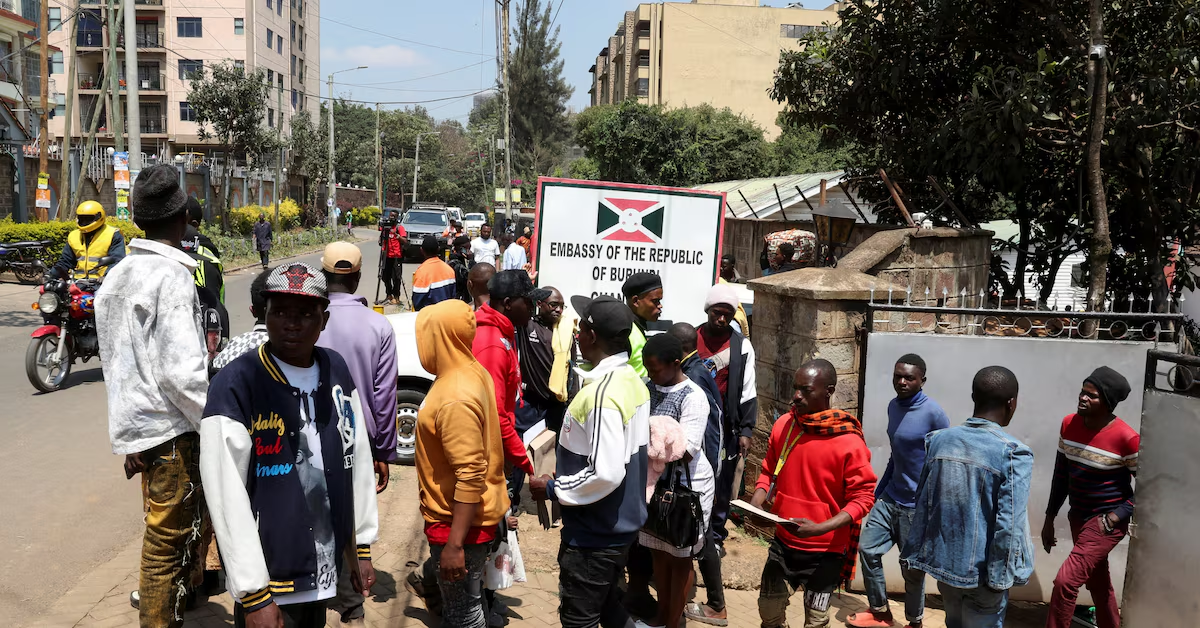
Burundi has condemned reported harassment of its nationals in Kenya and called on the Kenyan government to protect them following heightened tensions over foreign participation in small-scale businesses.
The concerns emerged after President William Ruto directed authorities to take action against foreign nationals operating small businesses without the required documentation and work permits.
Burundi's Foreign Affairs Minister Édouard Bizimana responded to reports of hostility towards Burundians, warning against hate speech and calling on Kenyan authorities to ensure the safety of his country's citizens.
The situation has caused anxiety among Burundi's community in Kenya. Hundreds of people gathered at the Burundian Embassy in Nairobi seeking travel documents, with some saying they intended to return home because they no longer felt safe.
Some Burundian nationals told Reuters they had experienced threats following Ruto's remarks and remained concerned about their safety even after the Kenyan government announced measures to protect foreigners.
Kenya has since clarified its position and announced a 90-day regularisation period for foreigners to obtain or update immigration documents, work permits, business registrations and licences.
Presidential spokesperson Hussein Mohamed said the government would work with foreign embassies during the exercise. He also warned that harassment, intimidation, discrimination and violence against foreign nationals would not be tolerated.
Foreign Affairs Principal Secretary Korir Sing'oei also visited Burundians gathered at their embassy and apologised for the distress caused by the situation. He said the government's intention was to identify and document foreign nationals while ensuring their security.
The dispute has also raised questions about regional integration. The East Africa Law Society has argued that while Kenya has the right to enforce immigration, licensing, labour and tax laws, such measures must also comply with its obligations under the East African Community framework.
Kenya hosts about 16,000 Burundian refugees and asylum seekers, according to figures cited by Reuters from the UN refugee agency. Many earn a living through small-scale businesses, including the sale of coffee and second-hand clothes.
The government's 90-day window is intended to provide an orderly path for affected foreigners to regularise their status before stricter enforcement begins.
For Kenya, the challenge will be enforcing its immigration and business laws while protecting legally resident foreigners and preventing the debate over jobs and small businesses from developing into xenophobic hostility.