
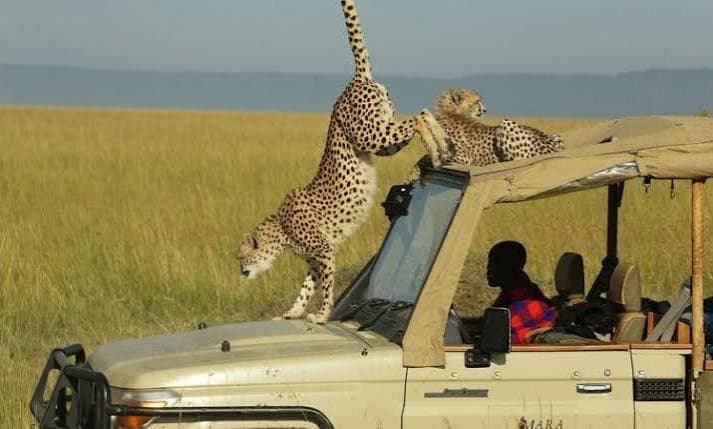
Kenya has launched an ambitious digital tourism initiative that will allow people around the world to watch wildlife and conservation activities live from some of the country's most recognisable national parks without initially having to travel for a physical safari.
Dubbed Experience Wonder Live From Kenya, the six-month programme is a partnership between the Kenya Wildlife Service and Kenya Tourism Board. It began on September 7 and is expected to run until March 2027, providing morning and afternoon broadcasts from different protected areas.
The programme will rotate across nine KWS-managed destinations, including Nairobi National Park, Amboseli, Tsavo East, Tsavo West, the Aberdares, Sibiloi, Meru, Ruma and Mount Elgon. Instead of focusing exclusively on animals, the broadcasts will also show the wider ecosystem supporting Kenya's conservation and tourism industries.
Viewers will get glimpses of rangers carrying out patrols, scientists monitoring wildlife and communities living alongside protected areas. Tourism experiences available around the destinations will also form part of the broadcasts, giving international viewers a broader picture of what visiting Kenya can offer.
Tourism and Wildlife Cabinet Secretary Rebecca Miano highlighted the initiative during a live viewing at Nairobi National Park as Kenya marked World Rhino Day. The broadcast placed particular attention on rhino conservation and the work being undertaken to protect the animals in Nairobi and other parts of the country.
The government is positioning the programme as a marketing tool rather than an alternative to travelling to Kenya. The idea is to use live digital experiences to introduce potential tourists to the country's wildlife and destinations, with the expectation that some viewers will eventually want to experience them physically.
That approach could give Kenya's tourism industry another way of reaching travellers at a time when digital platforms increasingly influence how people discover and choose destinations. Wildlife footage has long attracted enormous audiences online, but live broadcasting gives viewers the ability to watch events in the parks as they happen.
The broadcasts will be distributed through several platforms, including DStv, YouTube, Samsung TV Plus and Roku, alongside WildEarth's SafariLIVE programming. KWS says the content is capable of reaching more than 500,000 unique viewers each day across 16 global platforms.
For the Kenya Wildlife Service, the initiative also creates an opportunity to show conservation beyond the images of lions, elephants, rhinos and other animals normally associated with safari marketing. The broadcasts are intended to expose viewers to the daily work required to protect wildlife, including scientific monitoring and ranger operations.
KWS Director General Prof. Erustus Kanga said the programme would provide international audiences with a closer look at how conservation actually operates, while recognising the contribution of communities sharing landscapes with wildlife.
Community involvement is particularly important because many of Kenya's protected ecosystems extend beyond formal park boundaries. Wildlife frequently moves through areas occupied by people, making cooperation with neighbouring communities an important part of conservation and the management of human-wildlife interactions.
The programme will expand further from November with the introduction of curriculum-linked virtual school safaris. Students in Kenya and other countries will be able to connect with protected areas and learn about wildlife, ecosystems and conservation through digital experiences.
That educational component could extend the programme's reach beyond conventional tourism marketing. Schools that cannot physically take students to a Kenyan national park could potentially use the broadcasts to expose learners to conservation activities and wildlife in their natural environments.
Kenya also expects the project to leave behind a significant collection of digital material. Live broadcasts will be accompanied by wildlife highlights, short documentaries and tourism films that can continue to be used for destination marketing after the six-month programme ends.
The strategy reflects a broader change in how destinations compete for international visitors. Instead of relying entirely on advertisements, photographs and promotional films, tourism authorities can increasingly use live digital experiences to give potential travellers a direct window into a destination before they make a booking.
For Kenya, whose wildlife remains one of its strongest tourism assets, that means the next person inspired to visit the Maasai Mara, Amboseli, Tsavo or another destination may first encounter the country's wildlife through a television or smartphone thousands of kilometres away.