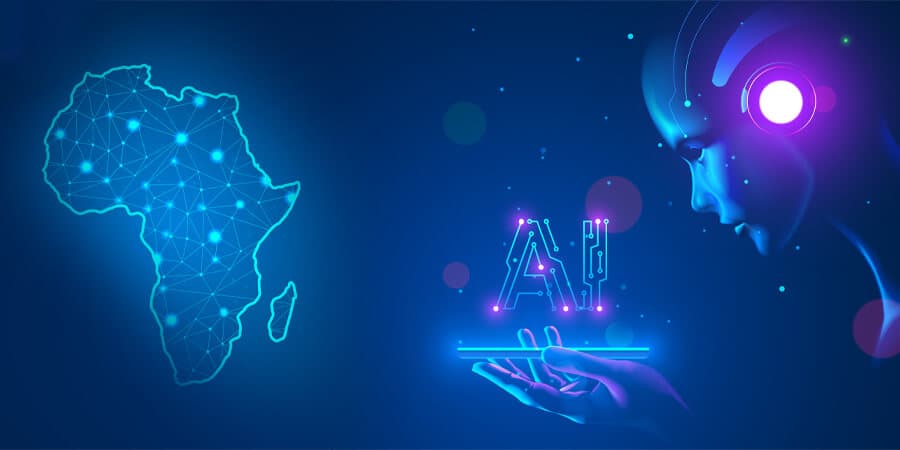
For generations, Africa’s story has often been told by others. Colonial administrators documented the continent through their own worldview. International correspondents frequently became the primary interpreters of African politics, conflict and culture for global audiences. Even today, much of the technology Africans use to communicate, search for information and create content is developed outside the continent.
Generative artificial intelligence is now introducing a new and potentially more consequential chapter in this history.
Tools such as ChatGPT, Gemini and other generative AI systems can write articles, create images, translate languages, generate voices and produce videos within seconds. The technology promises to make storytelling faster and more accessible. But it also raises a fundamental question for Africa: who gets to define what Africa looks like, sounds like and means when machines increasingly participate in telling its stories?
This is not simply a question about technology. It is a question about power, culture, identity and representation.
Generative AI learns from enormous quantities of existing information. Researchers have warned that bias can enter AI systems through the data collected, the way it is filtered and the assumptions built into models before they ever produce an answer.
That matters enormously for Africa.
The continent is home to thousands of languages and hundreds of millions of people, yet African languages and African perspectives remain significantly underrepresented in the digital information ecosystem. The Masakhane research community, for example, has highlighted the shortage of resources for African languages in natural-language processing and has worked to build African-centred machine-translation technologies.
The consequence is straightforward: an AI system can only tell African stories well if African voices are sufficiently present in the information from which it learns.
When AI imagines Africa
Consider something as simple as asking an image generator to create “an African village,” “an African journalist” or “an African city.”
What does the machine produce?
Does it understand the difference between Nairobi, Lagos, Johannesburg, Dakar and Addis Ababa? Does it distinguish a modern African technology hub from a rural settlement? Does it understand that African societies are not culturally uniform?
These questions expose one of the central problems of generative AI: Africa is not one story.
Yet algorithms can easily reproduce simplified representations when their training data disproportionately reflects particular images, narratives and cultural assumptions.
UNESCO has warned that AI systems used in education can be multilingual while remaining culturally narrow, because the training material can reproduce cultural biases.
The danger is not necessarily that AI deliberately misrepresents Africa. The deeper problem is that it can reproduce what is already overrepresented online.
If the internet contains more easily accessible information about Africa's conflicts, poverty, wildlife and political instability than its scientists, entrepreneurs, artists, engineers, filmmakers and ordinary communities, an AI system may inherit that imbalance.
That could create a new form of digital stereotyping: Africa represented not according to the complexity of African life, but according to the data available about Africa.
Language is the next battleground
Perhaps nowhere is this struggle more visible than in language.
Africa's linguistic diversity is enormous, but most global AI systems have historically been strongest in languages such as English, French, Spanish and Chinese.
This is changing.
In 2024, Google expanded Google Translate by adding 110 languages, including 31 African languages. The company said the expansion could reach roughly 200 million additional speakers and involved collaboration with universities, linguists and other organisations.
Google has also expanded AI Search support to additional African languages, including Kiswahili and Somali, according to reporting in 2026.
UNESCO has meanwhile developed an English-Kiswahili AI dictionary initiative aimed at strengthening digital inclusion.
These developments are important because language is more than a communication tool. Language carries memory, humour, history, identity and worldview.
If African languages remain poorly represented in AI, millions of Africans risk becoming consumers of technology designed primarily around other linguistic and cultural environments.
But the opposite is also possible.
African researchers are increasingly building technologies specifically for African languages. Masakhane, an open research community, has worked on machine translation across African languages, while other projects have developed datasets and language technologies for languages that have historically received little attention from mainstream AI research.
This represents a critical shift: Africa is beginning to move from being merely a subject of AI to becoming a participant in building it.
Kenya's newsroom is already changing
The debate is particularly relevant in Kenya, one of Africa's most digitally connected and technologically ambitious media markets.
Kenyan newsrooms are already experimenting with artificial intelligence for research, transcription, content production and other newsroom tasks. Research into the use of generative AI in Kenyan newsrooms has examined both the opportunities and challenges presented by these technologies.
Nation Media Group has also introduced policies to guide the use of artificial intelligence in its journalism, reflecting the growing need for media organisations to establish rules around AI-assisted reporting.
The Media Council of Kenya has similarly developed guidance on the use of AI in journalism. Its position is important because technology may accelerate journalism, but speed cannot replace verification, editorial judgment and accountability.
Globally, news organisations are moving in the same direction. Reuters announced this month a partnership with CuttingRoom that allows journalists and editors to use AI-assisted tools to search, edit and publish verified Reuters video content more efficiently. The system is designed to operate within newsroom editorial rules rather than simply replacing human editorial control.
This illustrates what the future of journalism may look like: journalists working with AI rather than simply competing against it.
But Africa faces a special challenge.
If African journalists become dependent on foreign AI systems to research, translate, illustrate and produce stories about African communities, who controls the narrative?
The danger of the invisible storyteller
The most powerful storyteller of the AI era may not be a journalist whose name appears at the bottom of an article.
It may be an algorithm.
Imagine a journalist asks an AI system to summarise a political crisis in an African country. The system produces a polished 700-word article. The journalist publishes it after minimal editing.
- Who selected the information?
- Who determined which sources mattered?
- Who decided which voices were credible?
- Who determined the historical context?
- And what happens if the model has absorbed stereotypes about the country?
The danger is that AI can make inaccurate information look authoritative.
A badly written article can be recognised as badly written. An AI-generated article can be grammatically perfect, confident and convincing while still being wrong.
For African journalism, this makes verification more important, not less.
The journalist of the future therefore cannot simply be a good writer. They must be a fact-checker, researcher, data specialist, digital investigator and AI-literate storyteller.
Africa must become a creator of AI narratives
There is, however, another side to this debate.
Generative AI could become one of Africa's greatest storytelling opportunities.
African filmmakers can use AI to experiment with visual effects. Journalists can translate stories into multiple languages. Community media organisations can produce content for audiences that previously lacked access to professional production facilities. Researchers can analyse large datasets. Indigenous-language speakers can develop digital resources for languages that have historically been neglected.
The technology can also help preserve culture.
African languages, oral histories and traditional knowledge that were previously difficult to digitise can increasingly be recorded, transcribed, translated and made searchable.
But this opportunity comes with an important condition:
Africans must have a seat at the table where these systems are designed.
That means African journalists, linguists, filmmakers, technologists, historians, educators and communities must contribute not only content but also the rules, datasets and cultural context used to build AI systems.
Otherwise, Africa risks entering another technological revolution primarily as a consumer.
The question is bigger than AI
The question “Who will tell Africa's stories?” therefore has no single answer.
It should not be Google.
It should not be Meta.
It should not be OpenAI.
It should not be governments.
And it certainly should not be algorithms operating without accountability.
Africa must tell its own story.
That does not mean rejecting foreign technology. It means ensuring that African technology users, journalists, researchers and creators are active participants in shaping it.
The continent needs more African-language datasets, stronger local research institutions, ethical AI policies, independent journalism and digital creators who understand that every article, photograph, podcast, video and database contributes to the information ecosystem from which future AI systems will learn.
The battle over Africa's digital future will therefore not only be about who owns the fastest computers or develops the most powerful AI model.
It will also be about who supplies the knowledge those machines learn from.
The future African storyteller may be a journalist using AI to investigate corruption, a Kenyan developer teaching a machine Kiswahili, a Nigerian filmmaker creating an African science-fiction universe, a South African researcher documenting indigenous knowledge, or a young creator telling her community's story from a smartphone.
Generative AI may change how Africa's stories are produced.
But it should never decide whose stories deserve to be told.
That responsibility belongs to Africans themselves.
The future of African storytelling should not be Africa as imagined by artificial intelligence. It should be Africa telling its own story with artificial intelligence as a tool, not the author.