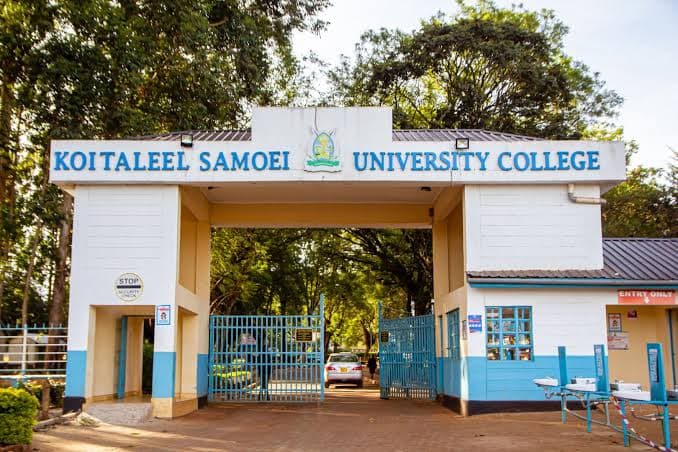
President William Ruto has announced that Koitalel Samoei University College in Nandi County is expected to receive its full university charter by February 2027, marking a significant step towards becoming an independent institution of higher learning.
Speaking during a visit to Nandi Hills on Saturday, October 17, the President said the government was committed to completing the institution's transition from a constituent college into a fully fledged university.
Ruto pledged to return to the institution in February to formally award the charter, which would allow the college to operate independently rather than under its current arrangement as a constituent college of the University of Nairobi.
The announcement was accompanied by a commitment of Sh3.5 billion towards infrastructure development, including student accommodation, lecture halls, library facilities and other essential academic infrastructure.
The President said the investment was intended to strengthen the institution's capacity to accommodate more learners while preparing it for the responsibilities associated with full university status.
During the visit, Ruto also presided over the foundation stone laying ceremony for student hostels expected to accommodate approximately 1,200 learners.
The accommodation project forms part of broader efforts to improve the learning environment and address infrastructure requirements as the institution expands.
Ruto indicated that construction activities had been progressing over the previous one and a half years, with the government seeking to accelerate development ahead of the planned charter award.
The proposed elevation is expected to strengthen access to higher education in Nandi County and neighbouring regions by providing additional opportunities for students seeking university education closer to home.
Koitalel Samoei University College was established in honour of Koitalel Arap Samoei, the renowned Nandi leader remembered for organising resistance against British colonial rule.
The institution carries historical significance for the Nandi community, with its development representing both an investment in education and recognition of the region's cultural heritage.
The planned charter would mark an important milestone in its institutional development, allowing it to operate as an independent university subject to the requirements established under Kenya's higher education regulatory framework.
University charters provide institutions with formal recognition and greater administrative independence, enabling them to develop governance structures and manage academic programmes within the applicable regulatory requirements.
However, obtaining a charter also requires institutions to demonstrate adequate academic resources, infrastructure, governance systems and financial capacity.
The government's Sh3.5 billion pledge is therefore expected to support preparations for the transition by improving the physical facilities needed to accommodate students and academic staff.
Student housing is among the immediate priorities, particularly as universities across Kenya face growing pressure to provide adequate residential facilities.
The proposed hostels could accommodate 1,200 students, potentially reducing the number of learners who must seek private housing away from campus.
The planned library and lecture halls are also expected to improve access to learning resources and create additional teaching space as enrolment grows.
The President's announcement comes amid wider government efforts to expand university infrastructure and strengthen access to tertiary education across the country.
Nevertheless, the administration has not provided a detailed breakdown of how the Sh3.5 billion will be allocated across individual projects or a specific date in February for the charter ceremony.
The February 2027 deadline now establishes a clear target for the institution's transition, although the award will still need to satisfy the applicable legal and regulatory requirements.
For students, university administrators and the surrounding community, the promised elevation represents an opportunity to expand academic programmes, attract investment and strengthen the region's education sector.