
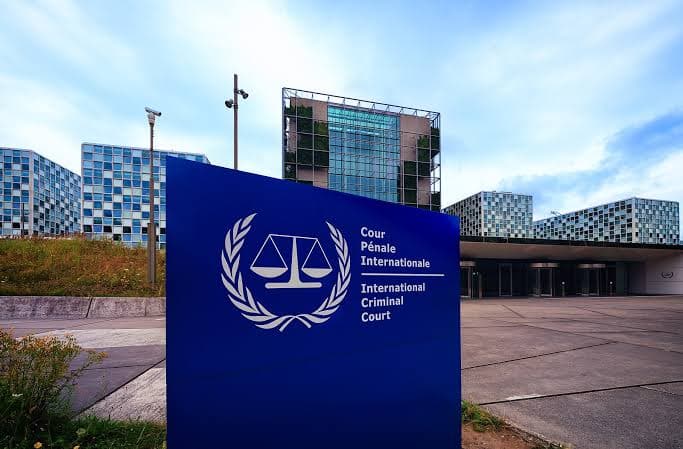
The International Criminal Court has replaced its health insurance provider as mounting sanctions from the United States begin affecting the companies and services on which the Hague-based institution depends.
The court and French insurance group Axa mutually terminated their contractual relationship effective October 1, with the ICC moving its employees to another health insurance provider whose identity has not been publicly disclosed.
The decision illustrates how sanctions targeting an international organisation can extend beyond judges and prosecutors and begin affecting ordinary services required to keep the institution operating.
Axa had spent months examining whether it could continue providing insurance to the ICC without exposing itself to risks arising from US sanctions, according to the Financial Times.
The French company cited concerns surrounding the extraterritorial application of American sanctions and described the international environment facing businesses as increasingly complicated.
Discussions between the insurer and the ICC reportedly considered possible mechanisms that could allow the relationship to continue. One potential solution involved a European blocking statute, a legal mechanism designed to protect companies from having to comply with certain sanctions imposed by foreign governments.
No applicable protection had been put in place, however, and the two sides eventually agreed to terminate their relationship.
The development comes as the administration of US President Donald Trump intensifies pressure on the ICC.
Washington has imposed financial and travel restrictions on a growing number of people associated with the court. The ICC said in August that nine of its 18 judges, both deputy prosecutors, a former prosecutor and another staff member had been sanctioned by the United States.
The United States is not a party to the Rome Statute that created the ICC and has long disputed the court's authority over citizens of countries that have not accepted its jurisdiction.
Tensions have intensified over investigations involving US allies, particularly Israel. The ICC issued arrest warrants in 2024 for Israeli Prime Minister Benjamin Netanyahu and former defence minister Yoav Gallant over alleged war crimes and crimes against humanity connected to the Gaza conflict. Israel rejects the allegations and disputes the court's jurisdiction.
The Trump administration has subsequently escalated its campaign against the institution, while US officials have argued that the ICC has exceeded its authority.
The court rejects that position and maintains that sanctions against its officials threaten judicial independence and undermine the international legal system established by its member states.
The dispute is now creating practical consequences.
Individuals targeted by US sanctions have reported losing access to financial and commercial services, including credit cards and services provided by American technology and logistics companies.
The possibility of broader sanctions against the ICC itself creates an even larger challenge because an international organisation depends on banks, insurers, technology providers, communications companies and other private businesses to operate.
Those companies can have significant exposure to the US financial system even when they are headquartered elsewhere. That can force executives to choose between continuing to serve a sanctioned organisation and protecting their companies' access to American markets and financial infrastructure.
The ICC has consequently been working to reduce its exposure to services that could be disrupted by US measures.
Among those changes has been a move away from some American technology infrastructure. The court has shifted office software from Microsoft products towards Germany's openDesk as part of efforts to increase operational independence.
European governments are also considering how they might protect the institution.
Some members of the European Parliament have supported using legal protections against the extraterritorial application of US sanctions, while European officials have reiterated support for the ICC and said discussions with member states are continuing.
The court prosecutes individuals accused of genocide, crimes against humanity, war crimes and the crime of aggression where its jurisdictional requirements are met. It was created under the Rome Statute and is supported by more than 120 member states.
Its relationship with Washington has nevertheless remained difficult because the United States has never joined the court.
The termination of the Axa contract demonstrates that the latest confrontation is no longer confined to diplomatic statements or sanctions against individual officials.
It is beginning to affect the operational relationships the ICC needs to function. The court has secured a replacement health insurer, meaning coverage can continue for now. But as Washington considers further measures, the larger question is how many international companies will be willing or legally able to continue providing services to the institution.