
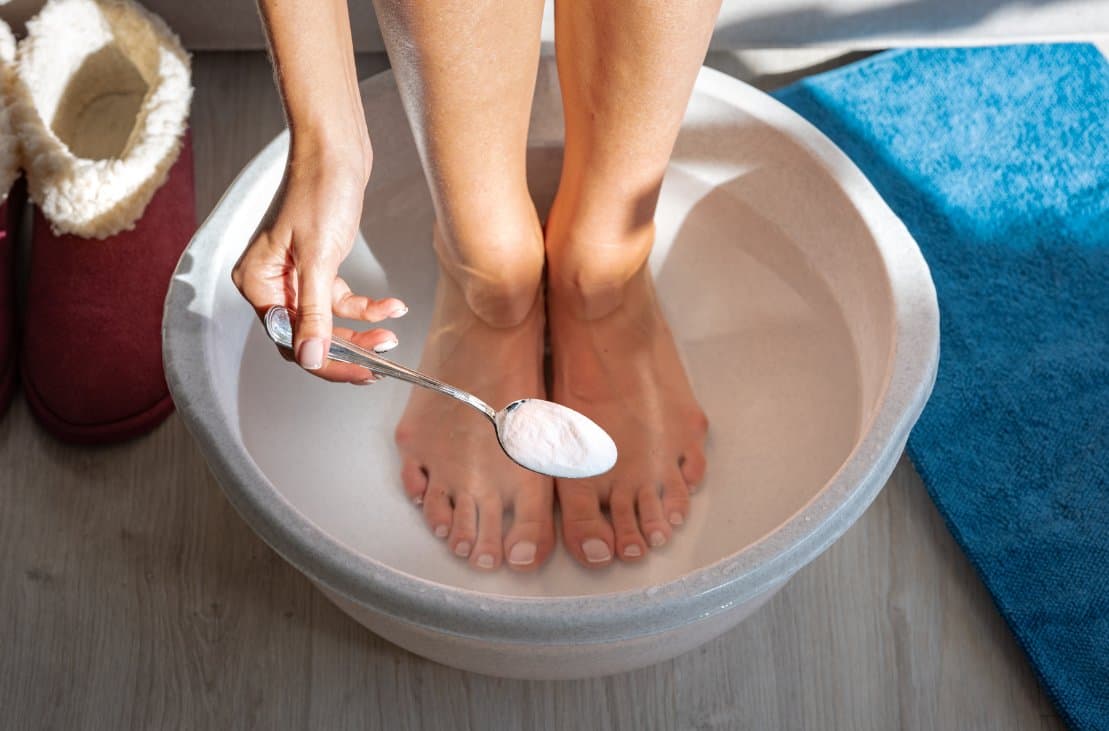
After spending hours inside closed shoes, feet can accumulate sweat and moisture, creating conditions that contribute to unpleasant odour and general discomfort. One inexpensive home remedy attracting attention involves soaking the feet in a mixture of warm water, vinegar and coarse salt.
The idea behind the routine is relatively straightforward. Vinegar is acidic, and its acidity may help create an environment that is less favourable to some microorganisms associated with foot odour. Salt is commonly added to the soak, while the warm water itself can make the routine relaxing after a long day of standing or walking.
Supporters of the practice also use it to soften hardened skin and leave the feet feeling cleaner and fresher. This can make the soak particularly appealing to people who spend much of the day wearing closed shoes or who experience sweaty feet.
However, claims about the mixture's ability to treat fungal infections should be approached cautiously. Scientific evidence establishing vinegar-and-salt foot soaks as an effective treatment for conditions such as athlete's foot remains limited. A soak may form part of a hygiene routine, but an established fungal infection may require appropriate antifungal treatment.
For those who choose to try the routine, one commonly suggested preparation involves adding about half a cup of vinegar and two tablespoons of coarse salt to approximately one litre of warm water. The feet can then be soaked for around 15 to 20 minutes before being rinsed and thoroughly dried.
Drying is particularly important. Moisture left between the toes can create favourable conditions for fungal growth, undermining the purpose of improving foot hygiene. Clean socks and breathable footwear can also help manage excessive moisture and odour.
The acidic nature of vinegar also means the routine is not appropriate for everyone. People with open wounds, cracked or irritated skin should avoid applying vinegar to affected areas because it can cause irritation. Anyone experiencing persistent itching, swelling, pain, significant skin changes or signs of infection should seek professional medical advice rather than relying on a home remedy.
People with conditions that affect circulation or sensation in their feet should also be particularly cautious about experimenting with foot treatments without professional guidance.
The salt-and-vinegar soak is better viewed as an occasional personal-care routine rather than a medical treatment. For otherwise healthy feet, it may provide a refreshing experience and help with everyday hygiene, but persistent foot problems require proper diagnosis and treatment.