Safaricom and payment technology company Pesapal are expanding the use of M-PESA QR-code and contactless payment options across physical merchant outlets, in a move that could make everyday shopping faster while strengthening Kenya’s shift towards digital commerce.
Announced on 1 October 2026, the partnership introduces Dynamic Scan-to-Pay and Tap-to-Pay on Pesapal point-of-sale (POS) terminals, allowing customers to complete transactions without manually entering a merchant’s till number and payment amount. The initiative builds on M-PESA’s established role in Kenya’s financial ecosystem while extending its capabilities at supermarket counters, restaurants and other participating businesses.
The expansion is significant because it focuses on a familiar problem for customers and merchants: the time and potential errors involved in completing payments at busy checkout points.
Under the Dynamic Scan-to-Pay system, a merchant’s POS terminal generates a QR code containing the transaction amount. A customer scans the code using the supported M-PESA application, checks the displayed details and authorises payment using the required authentication method.
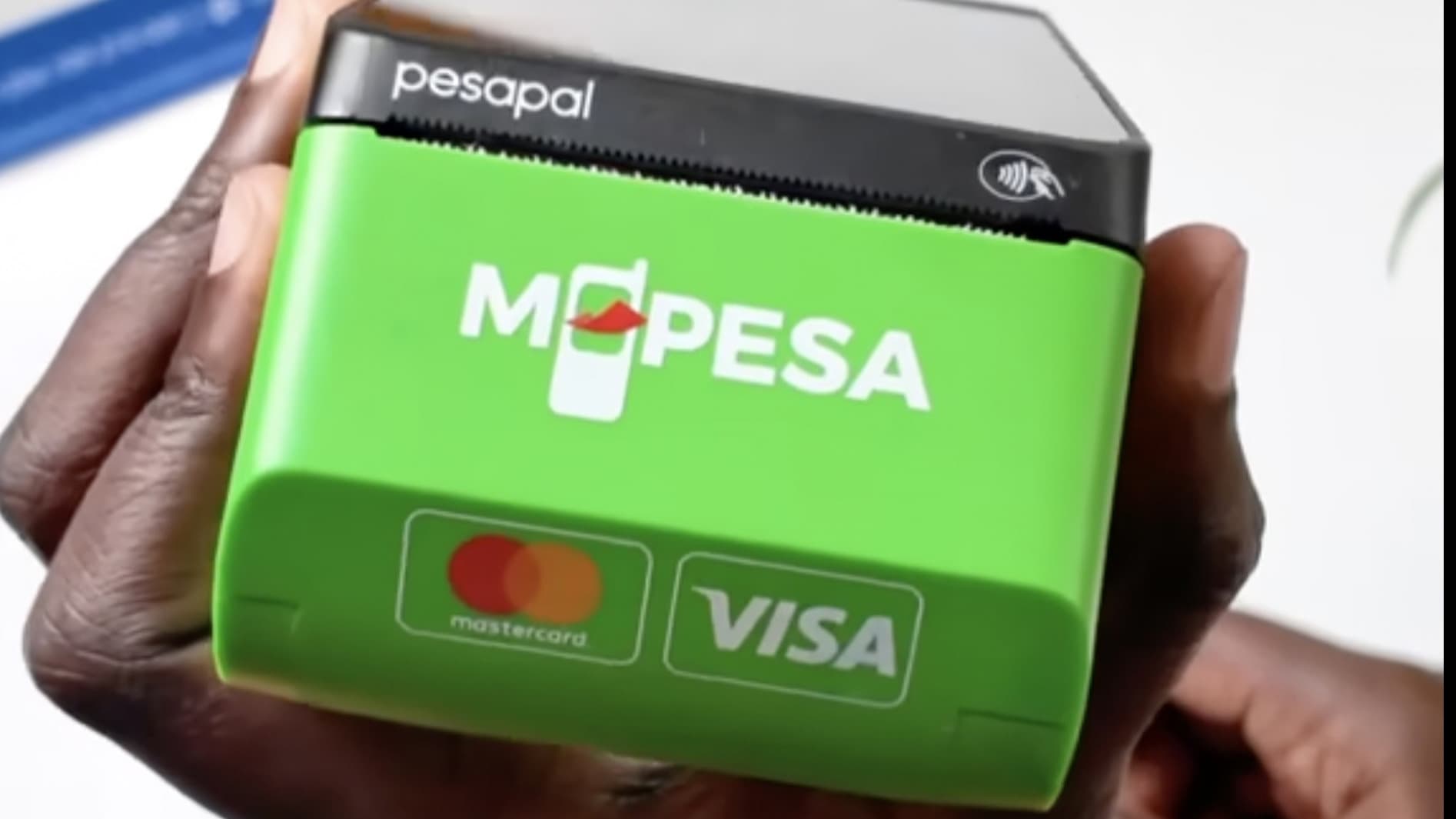
Tap-to-Pay offers another option. Customers with compatible near-field communication (NFC) smartphones can tap their devices against a supported Pesapal terminal, review the transaction details and authorise the payment. The technology uses short-range wireless communication to facilitate the interaction between the phone and payment terminal.
By automating parts of the payment process, the two services reduce the need to type transaction information manually, potentially lowering the risk of entering an incorrect amount or paying the wrong merchant.
A wider merchant network
The partnership builds on an existing payments infrastructure rather than introducing QR payments to Kenya for the first time. According to reporting by Techweez on 1 October, Scan-to-Pay was already available at more than 60,000 merchant outlets, with a target of expanding coverage to 500,000 within the following year.
That target represents a substantial planned expansion, although it should not be interpreted as a completed rollout. Actual availability will depend on merchant participation, compatible equipment and implementation progress.
The scale of the ambition matters for a country where mobile money is deeply integrated into daily commercial activity. Safaricom’s M-PESA has developed from a person-to-person money transfer service into a broader platform for payments, business collections and financial services.
Pesapal contributes the infrastructure that connects digital payments to physical checkout counters. Its POS terminals support M-PESA and card payments, enabling merchants to accept different payment methods through a single device.
For businesses, this integration could reduce friction at the till, simplify payment reconciliation and give customers more flexibility. For shoppers, it offers an alternative to manually entering payment details, particularly when queues are long or several transactions are being processed simultaneously.
Beyond convenience
The expansion also reflects a wider change in how financial technology companies compete. Digital payments are no longer judged solely by whether money can move from one account to another. The speed, reliability and ease of completing a transaction are increasingly important parts of the customer experience.
In a busy restaurant, for example, a customer waiting to settle a bill may face delays while staff prepare payment instructions or confirm the transaction. A QR code displaying the exact amount can remove some of these steps. Similarly, tapping a compatible phone against a terminal may make checkout more straightforward in a retail store.
For small and medium-sized enterprises, such improvements could be valuable during peak trading hours, when slow payment processes can affect customer turnover. Digital records may also help merchants track collections and reconcile sales more efficiently, depending on the systems they use.
Safaricom Group Chief Technology Officer James Maitai said the partnership was intended to move M-PESA beyond basic payment functionality and improve everyday transactions by combining the companies’ respective capabilities.
Pesapal founder Agosta Liko has similarly positioned the services as a way to deliver quicker and more convenient checkout experiences for businesses and their customers.
However, faster payments alone will not guarantee higher sales or lower operating costs. Those outcomes will depend on transaction reliability, merchant fees, staff training, device availability and whether customers adopt the new options consistently.
Security remains central
The move towards contactless payments also raises questions about consumer protection and digital security. While QR codes and NFC can simplify checkout, customers must still verify that the amount and merchant details displayed on their phones are correct before approving a transaction.
A QR code should not be treated as trustworthy simply because it appears at a shop counter. Fraudsters can replace legitimate codes with fraudulent ones, potentially redirecting payments to unintended recipients.
Customers should therefore use official payment applications, confirm transaction details and never disclose their M-PESA PIN to merchants or anyone claiming to provide technical assistance. They should also retain transaction confirmations and report suspicious activity through official support channels.
For merchants, protecting POS devices, monitoring transactions and ensuring staff understand the payment process will be essential to building confidence in the technology.
Accessibility is another consideration. Tap-to-Pay depends on compatible devices and supported software, while QR payments require customers to have access to a suitable phone and the relevant payment service. Network disruptions, low battery levels and limited digital literacy may also affect the experience.
These limitations mean that cash and other payment options will remain important for customers who cannot or do not wish to use the new services.
The next test for Kenya’s digital economy
The Safaricom–Pesapal partnership demonstrates how Kenya’s digital payments market is moving towards more integrated experiences at the point of sale. Rather than relying exclusively on conventional till-number entry, customers are being offered additional ways to initiate and authorise payments.
The planned expansion from more than 60,000 Scan-to-Pay outlets to a target of 500,000 illustrates the potential scale of the initiative. Yet the measure of success will not simply be the number of participating outlets or compatible terminals.
The more important questions are whether transactions become demonstrably more reliable, whether small businesses can afford to participate, whether customers understand how to use the services and whether the systems remain secure as adoption grows.
For Kenya, the opportunity lies in turning digital payment infrastructure into practical economic value. If the rollout delivers on its promise, QR and contactless payments could help make everyday transactions more efficient while giving businesses better tools to serve customers.
The challenge now is to ensure that convenience is matched by trust, affordability and broad access. In a market where mobile money is already part of everyday life, the next phase of innovation will be judged by how effectively it improves the experience at the checkout counter.