Safaricom is expanding how Kenyans pay through M-Pesa with a new generation of checkout options designed to reduce the number of steps customers go through when paying businesses.
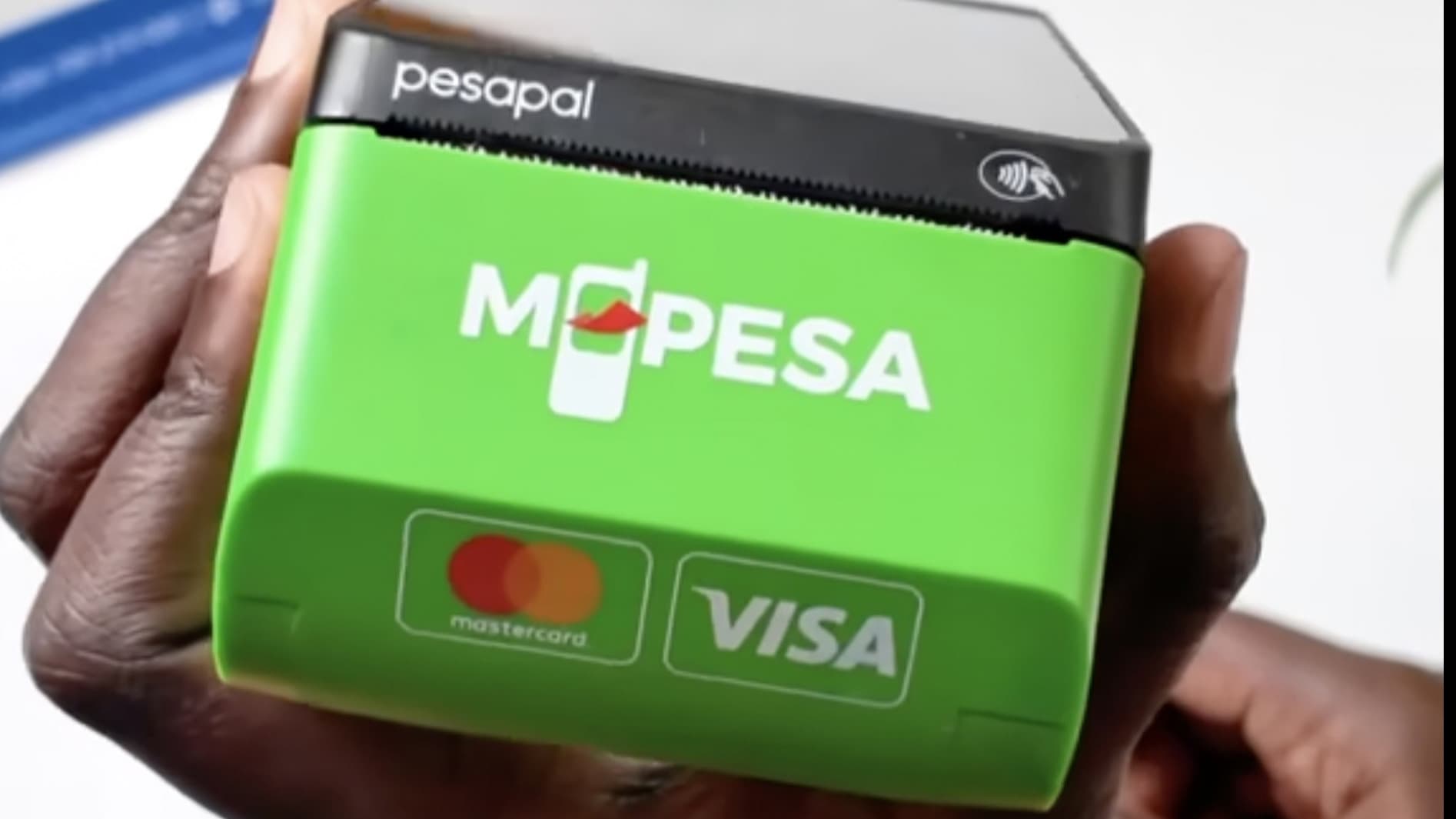
The telecommunications company has partnered with payments technology firm Pesapal to roll out Dynamic Scan-to-Pay and Tap-to-Pay through Pesapal point-of-sale terminals, while Safaricom is also introducing an AI-assisted payment feature.
The changes move M-Pesa closer to the experience associated with contactless bank cards and digital wallets, where a customer can complete a transaction without manually navigating several menus and entering merchant details.
With Tap-to-Pay, customers using compatible NFC-enabled smartphones will be able to tap their devices against supported Pesapal point-of-sale terminals to initiate an M-Pesa payment.
The customer still authorises the transaction, meaning tapping a phone against a terminal does not simply allow money to leave an M-Pesa account without confirmation. The technology is intended to make initiating the payment faster while retaining the authentication required to complete the transaction.
Safaricom and Pesapal are also expanding QR-based payments through Dynamic Scan-to-Pay.
Instead of a customer manually typing a Till number and the amount owed, a Pesapal terminal can generate a dynamic QR code containing the transaction details. The customer scans the code and proceeds with the M-Pesa payment, reducing the possibility of entering the wrong merchant number or amount.
That could be particularly useful in supermarkets, restaurants, pharmacies and other businesses where customers currently move between a merchant's point-of-sale system and their phones to manually reproduce payment information.
The third feature, AI Pay, takes a different approach. The technology allows a customer to use their phone camera to scan payment information on items such as bills or receipts. Artificial intelligence identifies the relevant payment details, including Till or PayBill information, and prepares the transaction for the customer to verify.
The customer remains responsible for confirming the transaction before money is transferred.
Together, the features are designed to address one of the remaining areas of friction in mobile money payments. M-Pesa made it possible for customers to pay businesses without cash, but conventional Till and PayBill transactions can still require users to manually enter business numbers, account information and payment amounts.
Dynamic QR codes and AI-assisted extraction reduce that manual work, while NFC allows the payment process to begin with a physical tap at the checkout.
Pesapal's involvement is important because its point-of-sale infrastructure is already used by merchants to process payments. Integrating M-Pesa directly into those terminals means businesses can accept the new payment methods without operating an entirely separate checkout environment.
Safaricom Group Chief Technology Officer James Maitai said the company wants M-Pesa to continue evolving alongside changes in how Kenyans shop and transact, while Pesapal founder and CEO Agosta Liko said the collaboration was intended to simplify the merchant payment experience.
The rollout also reflects increasing competition over the physical checkout.
Banks and payment companies have traditionally dominated card terminals, while M-Pesa built its merchant network around Till and PayBill numbers. Bringing tap and dynamic QR functionality to M-Pesa effectively combines those two payment environments at the point of sale.
Contactless payments have become increasingly common internationally as consumers use cards, smartphones and smartwatches to complete transactions. Kenya's exceptionally high use of mobile money, however, means Safaricom has an opportunity to adapt similar checkout behaviour without requiring customers to move away from M-Pesa.
Safaricom has not abandoned existing M-Pesa payment methods. Customers will still be able to use conventional Till, PayBill and other established channels, with the new options providing additional ways of initiating transactions.
The significance of the upgrade is therefore not that M-Pesa is replacing its existing payment system, but that Safaricom is attempting to make mobile money increasingly invisible at checkout.
For a customer, that could eventually mean less time looking for a Till number, entering digits and checking payment details. The transaction begins with a tap, scan or camera, while M-Pesa continues to handle the movement of money behind the scenes.