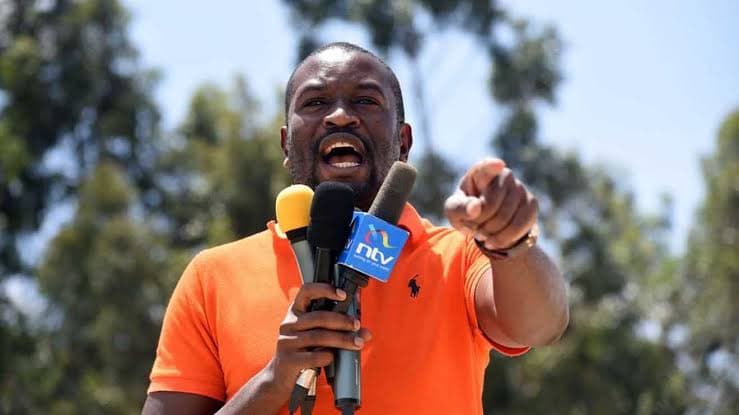
Nairobi Senator Edwin Sifuna has intensified his political confrontation with President William Ruto, questioning the government's handling of mandatory salary deductions and public resources as debate over the Affordable Housing Levy continues to dominate Kenya's political landscape.
In a strongly worded statement issued on Wednesday, October 14, 2026, Sifuna challenged the President to address concerns surrounding the Social Health Authority (SHA), revealing that he contributes KSh43,000 monthly towards the healthcare financing scheme. The senator argued that the discussion should extend beyond his KSh24,000 monthly housing levy contribution to include other deductions affecting Kenyan workers.
The latest exchange follows remarks made by President Ruto during his development tour of the North Rift region, where he criticised Sifuna for opposing the government's affordable housing programme despite earning a substantial salary. Ruto questioned the senator's position, arguing that the housing initiative was creating employment opportunities and improving living conditions for low-income Kenyans.
Responding to the President, Sifuna questioned why his housing levy contribution had attracted so much attention while other mandatory deductions remained largely unaddressed. He described both the housing levy and SHA as questionable government programmes, challenging the administration to demonstrate how taxpayers were benefiting from their contributions.
The Nairobi senator further disclosed that approximately KSh500,000 is deducted from his monthly earnings through Pay As You Earn (PAYE) income tax. He accused the government of failing to exercise financial discipline, arguing that taxpayers deserved greater accountability over how public resources were allocated and spent.
Sifuna specifically criticised expenditure at State House, alleging that substantial amounts collected from taxpayers were being used to sustain unnecessary government spending. His remarks reflected his broader argument that reducing public expenditure should take priority over introducing or maintaining deductions that place additional pressure on workers.
The confrontation began after Sifuna told the Senate on Thursday, October 8, that he had been contributing an average of KSh24,000 monthly towards the Affordable Housing Levy. He maintained that paying into the programme gave him the right to demand transparency regarding the collection, management and utilisation of the funds.
President Ruto subsequently responded during a public address on Tuesday, October 13, questioning the senator's opposition to a programme that the government considers central to its economic transformation agenda. The President estimated Sifuna's monthly earnings at approximately KSh1.8 million based on his disclosed housing levy contribution and accused him of disregarding the interests of ordinary Kenyans who stood to benefit from affordable housing projects.
Ruto defended the initiative as an important source of employment, particularly for young people working in construction and related industries. He also argued that abandoning the programme would undermine efforts to provide decent housing for families living in informal settlements and other underserved communities.
However, the President's salary calculation has attracted attention because the statutory employee housing levy is set at 1.5 per cent of gross monthly earnings. On that basis, a monthly contribution of KSh24,000 would correspond to a gross salary of approximately KSh1.6 million, rather than the KSh1.8 million cited by Ruto. The difference has added another dimension to the public debate surrounding the senator's disclosures.
Sifuna has maintained that the opposition will pursue significant changes to government expenditure and taxation if it assumes power following the 2027 General Election. Among his proposals is the abolition of the Affordable Housing Levy, which he argues would provide financial relief to employees facing multiple deductions from their monthly salaries.
The senator's position places him directly at odds with the Kenya Kwanza administration, which has consistently defended the housing levy as a financing mechanism for expanding affordable housing and supporting employment. While the government emphasises the programme's anticipated economic and social benefits, critics continue to question its affordability, transparency and immediate impact on workers' disposable incomes.
The dispute has also drawn attention to the Social Health Authority, another major government reform funded through mandatory contributions. Although the administration maintains that the healthcare financing system is intended to expand access to medical services, critics have raised concerns about the financial burden on contributors and the effectiveness of service delivery.
With the 2027 General Election approaching, the exchange between Ruto and Sifuna illustrates how taxation, healthcare financing and the cost of living are becoming central political issues. The competing positions highlight a broader national debate over how the government should balance revenue collection, public investment and financial relief for households.
For Sifuna, the controversy presents an opportunity to challenge the administration's economic policies and demand greater accountability. For Ruto, defending the housing programme remains an important part of demonstrating the benefits of his government's development agenda, setting the stage for continued political exchanges over the future of Kenya's mandatory salary deductions.