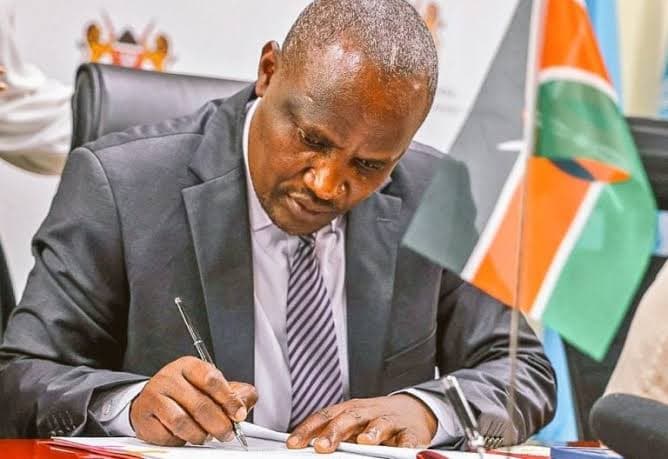
Kenya is preparing for a fresh round of economic discussions with international lenders and development partners after National Treasury Cabinet Secretary John Mbadi and Principal Secretary Chris Kiptoo arrived in Bangkok, Thailand, for the 2026 Annual Meetings of the International Monetary Fund (IMF) and World Bank Group.
The meetings, scheduled for October 12 to 18, bring together finance ministers, central bank governors, development institutions and economic policymakers to discuss global financial conditions, development priorities and international economic cooperation. Kenya's participation comes at a time when the government is seeking to balance its financing needs with efforts to maintain economic stability.
The National Treasury confirmed the delegation's arrival on Sunday, October 11, saying the meetings would provide an opportunity to engage international financial institutions and development partners on policies and financing arrangements that could support Kenya's long-term economic objectives.
Upon arriving in Bangkok, Mbadi and Kiptoo met Kenya's Ambassador to Thailand, Lucy Kiruthu, and officials at the Kenyan Embassy. The delegation subsequently held a coordination meeting to review preparations and align its priorities ahead of discussions with international partners.
The Treasury's participation comes against a challenging global economic environment characterised by geopolitical uncertainty, fluctuating commodity prices and climate-related disruptions. Such developments can affect Kenya through higher import costs, changes in inflation and shifts in international borrowing conditions.
For Kenya, access to affordable development financing remains an important consideration as the government seeks resources for infrastructure, public services and other development priorities. External financing can help support these investments, although additional borrowing must be weighed against debt-servicing obligations and fiscal sustainability.
The Bangkok meetings also follow recent remarks by Central Bank of Kenya Governor Kamau Thugge, who indicated that the country could meet its borrowing requirements for the 2026/27 financial year without necessarily securing new loans from the IMF.
Speaking during a Monetary Policy Committee briefing on October 8, Thugge said Kenya's borrowing requirement stood at approximately Sh987 billion. He explained that the country's financing strategy did not currently depend on additional IMF resources, although concessional funding from the institution could still be beneficial to the Treasury.
Thugge also projected that Kenya's foreign exchange reserves could reach approximately $15 billion by the end of 2026, excluding potential IMF financing. The projection suggests an expectation of stronger external financial buffers, which can help the country manage import payments and other foreign currency obligations.
The governor distinguished between the country's balance-of-payments position and its broader government financing requirements. While he indicated that an IMF programme was not essential for immediate external payment needs, he acknowledged that the institution's relatively affordable financing could remain attractive to the National Treasury.
This distinction is important because IMF engagement extends beyond direct lending. The institution also provides economic assessments, policy advice and technical assistance, while its programmes can influence how other lenders and investors assess a country's economic management.
Kenya has continued exploring financing opportunities through various international institutions, including the World Bank and African Development Bank. Such engagements form part of the government's broader effort to secure funding while managing the cost and maturity of its debt obligations.
The IMF and World Bank meetings offer an opportunity for Kenyan officials to present the country's economic priorities, discuss potential support and strengthen relationships with institutions that influence development financing across emerging economies.
However, the Treasury has not announced any specific loan agreements or new financing commitments arising from the Bangkok visit. Its statement also did not identify particular funding negotiations scheduled during the meetings, meaning any potential financial outcomes remain uncertain.
The discussions are nevertheless significant because Kenya's economic outlook remains closely connected to global financial conditions. Changes in international interest rates, commodity markets and investor sentiment can affect the cost of borrowing and the government's ability to finance its development agenda.
As Mbadi and his delegation engage international partners throughout the week, attention will turn to whether the discussions produce new financing opportunities, stronger development partnerships or policy commitments capable of supporting Kenya's economic priorities.
For the government, the immediate challenge remains securing affordable resources while protecting economic stability and limiting additional pressure on public finances. The Bangkok meetings provide another platform to pursue those objectives, even as the outcome of the engagements remains to be seen.