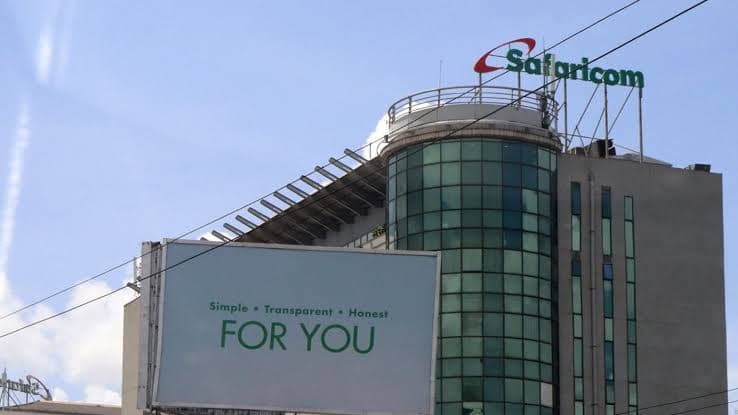
Safaricom has moved to the High Court seeking Sh540.2 million from Kubwa Capital in a dispute over who should bear hundreds of millions of shillings in unpaid Okoa bundle loans advanced to subscribers.
The telecommunications company claims Kubwa Capital agreed to absorb bad debts arising from a partnership that expanded the amount of airtime and data qualifying customers could borrow.
Kubwa Capital disputes that interpretation and denies owing Safaricom the Sh540.2 million being demanded, setting the stage for the court to determine what the agreement actually required from each company.
At the centre of the dispute is Safaricom's Okoa service, which allows eligible subscribers to access airtime or bundles on credit and repay the amount later.
According to Safaricom's court documents, Kubwa Capital proposed a partnership that would allow the telecommunications company to expand the borrowing limits available to qualifying customers.
Subscribers who were eligible for loans of up to Sh500 under Safaricom's existing Okoa Jahazi rules could have their limits doubled under the arrangement.
Expanding eligibility and borrowing limits, however, also increased the financial risk if subscribers failed to repay what they borrowed.
Safaricom argues that Kubwa Capital agreed to take responsibility for that additional bad-debt exposure.
The telecommunications company says the agreement required Kubwa Capital to provide a Sh30 million monthly bank guarantee as protection against unpaid debts. Safaricom also says the arrangement contained a Sh100 million bad-debt threshold that could trigger termination of the partnership.
Revenue generated through the arrangement was to be divided between the two companies, with Safaricom receiving 85 per cent and Kubwa Capital taking the remaining 15 per cent.
The relationship eventually deteriorated as unpaid debts accumulated.
Safaricom claims it repeatedly raised concerns about Kubwa Capital's alleged failure to cover the bad debts as required under the partnership. According to the telco, those losses eventually exceeded Sh500 million.
Kubwa Capital terminated the agreement on September 30, 2025, after which Safaricom demanded payment of the amount it said remained outstanding.
Safaricom argues that the outstanding bad debts ultimately reached Sh540.2 million, which it is now seeking to recover through the High Court.
The defendant strongly disputes that account. Lawyer Donald Kipkorir, representing Kubwa Capital, has argued that his client does not owe Safaricom the Sh540.2 million or any other amount being demanded.
Kubwa Capital's position is that the value of its obligation was tied to the Sh30 million guarantee, rather than an unlimited obligation to absorb the hundreds of millions of shillings in bad debts subsequently claimed by Safaricom.
The company has also accused Safaricom of failing to fulfil parts of the partnership agreement. Kubwa Capital claims Safaricom was required to provide daily performance reports and had responsibilities relating to monitoring repayment of the debts. It argues that failures on Safaricom's side contributed to the losses generated by the arrangement.
The dispute therefore goes beyond whether subscribers failed to repay Okoa bundles. That appears not to be the central issue before the court.
Instead, the case is about which company contractually accepted the financial consequences when those customers defaulted.
Safaricom says the wording of the partnership agreement placed that risk on Kubwa Capital. Kubwa Capital argues that Safaricom's interpretation is incorrect and that the telco cannot transfer the Sh540.2 million liability to it.
Correspondence between the companies shows that the disagreement continued after the partnership ended.
Safaricom issued demands for payment, including another demand in July 2026. Kubwa Capital responded the following month denying liability in full.
The High Court will now have to examine the agreement, guarantees, revenue-sharing arrangement and obligations of both companies before determining whether Safaricom is entitled to recover the money.
Until that happens, the Sh540.2 million remains a claim by Safaricom rather than an established debt owed by Kubwa Capital.
The case provides a rare glimpse into the financial arrangements that can sit behind mobile credit products used by millions of telecommunications customers.
While a subscriber may experience Okoa as a simple short-term service activated from a phone, partnerships behind such products can involve guarantees, credit-risk allocation, revenue sharing and potentially hundreds of millions of shillings when customer defaults accumulate.