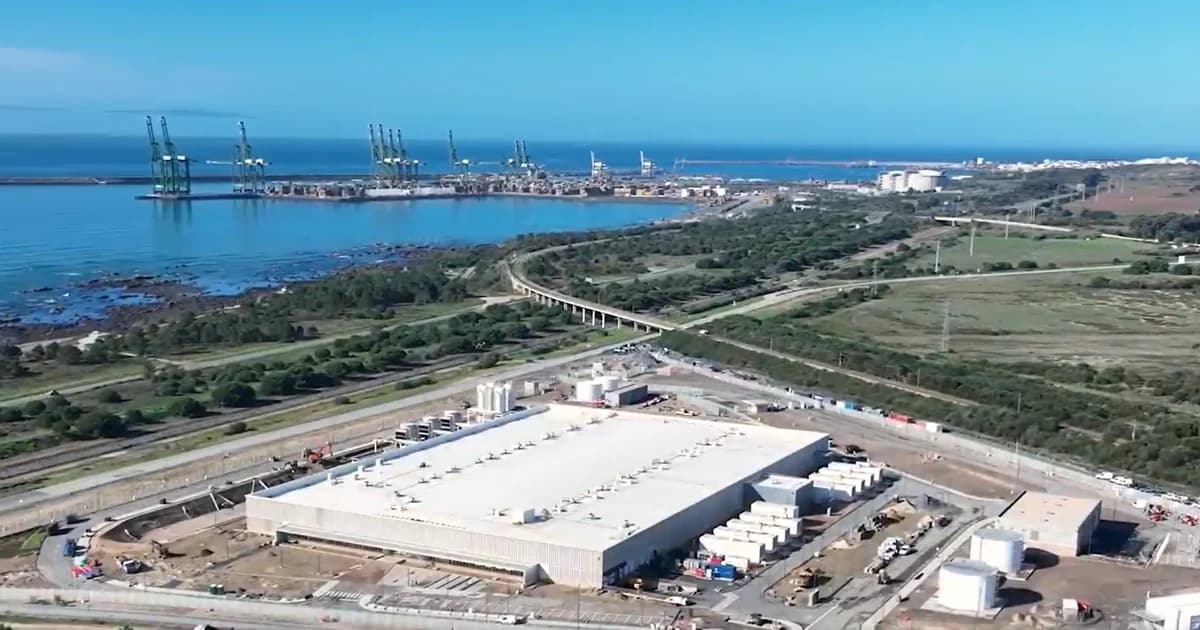
Greek multinational Amaco Energy Group has entered into a partnership with GE Vernova as it advances plans to develop a $1.5 billion, approximately Sh194.2 billion, artificial intelligence data centre in Mombasa.
Under the cooperation agreement, GE Vernova gas turbines will be integrated into Amaco's planned Hercules power barge, which will provide dedicated electricity for the data centre. Other technologies from the US energy company, including electrification and digital systems, could also be incorporated as the project develops.
The proposed Hercules facility combines power generation, cooling and AI-ready data centre infrastructure. Unlike conventional data centres connected to the national electricity network, Amaco plans to operate the Mombasa facility using an independent offshore liquefied natural gas power system.
Amaco is considering Dongo Kundu and Kilindini as potential locations for the development. Mombasa offers an important advantage for data centre infrastructure because several international submarine fibre-optic cables land on Kenya's coast, providing connectivity to global internet networks. The Port of Mombasa and nearby Special Economic Zone could also support demand from industrial businesses.
Amaco chief executive Theodore Theodoropoulos has been holding discussions with Kenyan authorities as the company seeks approval for the investment. In August, he met ICT Cabinet Secretary William Kabogo to discuss the proposal. The ICT Ministry confirmed that discussions centred on an integrated LNG-powered facility bringing together electricity generation, cooling, LNG storage and regasification, and AI-ready data centres.
The project comes as Kenya attracts increasing investment in infrastructure needed to support artificial intelligence, cloud computing, digital finance and other data-intensive services.
Power availability has become particularly important as AI data centres require enormous amounts of electricity to operate computing equipment and cooling systems. Amaco's decision to generate its own electricity could help the project avoid placing additional pressure on Kenya's national grid.
The company has not yet disclosed the final capacity of the proposed data centre or a construction timeline. Current estimates cited in the project indicate around 75 megawatts of potential demand from heavy industry, with another 75 to 100 megawatts potentially coming from initial data centre customers.
If approved and developed, the investment could strengthen Mombasa's emerging role in Kenya's digital infrastructure sector and support the country's ambition to become a major regional hub for AI and cloud computing.
For now, however, the Sh194.2 billion development remains a proposal progressing through discussions with Kenyan authorities, with the GE Vernova partnership providing a key technology component for its planned independent power infrastructure.