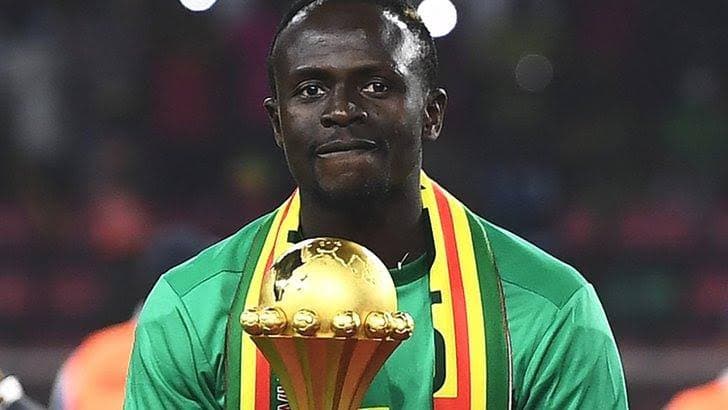
Sadio Mane, a world-class footballer has earned global admiration not only for his brilliance on the pitch but also for his unwavering commitment to giving back.
Through the wealth and influence gained during his professional career, he has transformed his hometown of Bambali, Senegal, by building schools, improving healthcare, and investing in projects that uplift his community.
For Mane, true success is measured not by personal achievements or trophies, but by the number of lives he can change.
Who is Sadio Mane?
Sadio Mane was born on the 10th of April, 1992 in a small village called Bambali in the Sédhiou region of Senegal. Mane was raised in a deeply religious, low-income household where he faced severe financial hardships and opposition from his family, especially his father who strictly forbade him from playing football, insisting he prioritize his Islamic studies. to his passion for football.
Long before the bright lights of Europe's biggest stadiums, Mane cemented his talent on the dusty pitches of Bambali. With no proper footballs, he chased his dream barefoot, kicking rocks, grapefruits and tightly wrapped rags in place of a ball. Mane's passion could not be distinguished by his family's financial struggles that denied him the chance to follow an academic path
Determined to pursue his dream, Mane secretly travelled to Dakar and when his family witnessed the depth of his commitment to football, they put aside their doubts and gave him the full support that would help him launch one of Africa’s greatest football
Mane’s football success.
Sadio Mane's journey began at AS Generation foot in Senegal before earning a move to FC Metz in France where he made his professional breakthrough. He then joined Red Bull Salzburg in Austria, impressing with his pace and goalscoring ability, which paved the way for a transfer to Southampton in the English Premier League.
His outstanding performance at Southampton earned him a move to Liverpool, where he became one of the world's finest forwards, winning the Premier League, UEFA Champions League, FA Cup, League Cup, FIFA Club World Cup, and UEFA Super Cup.
Seeking a new challenge, he signed for Bayern Munich, adding another league title to his collection before continuing his career with Al Nassr in Saudi Arabia. From a determined youngster in Senegal to a global football icon, every club played a crucial role in shaping Mané into one of Africa's greatest players.
Success never changed Mane.
Sadio Mane has become a global symbol of humility, proving that true greatness is measured not by wealth but by the impact one leaves on others. Despite earning millions throughout his football career, he has remained grounded, rejecting a life of extravagance in favour of investing in his roots.
Rather than chasing luxury, Mane has channelled his fortune into transforming his hometown of Bambali. He has no need for luxury mansions, private jets or multiple sports cars and he has been noted for carrying his personal belongings in plastic bags and using a phone with a cracked screen rather than showing off expensive gadgets.
Giving back to Bambali, Senegal.
Mane's greatest legacy May not be found in the trophies he has lifted, but in the transformation taking place in his hometown of Bambali. He donated roughly $693,000 towards the construction of the town's first regional hospital, bringing essential healthcare closer to thousands of people across 34 surrounding villages.
The hospital includes dental services, maternity care and consultation rooms, giving residents access to medical services that were once difficult to reach. His commitment to education is equally remarkable. Mané also funded the construction of a modern high school worth €250,000, giving children in Bambali a better environment to learn and build their futures.
But Mane's vision for Bambali extends far beyond classrooms and hospital walls. He funded the construction of a mini football stadium where local youngsters can safely develop the same passion that once carried him from dusty fields of Bambali to the world stage.He also invested in a petrol station and post office, helping improve the town’s basic services and everyday life.
To further connect the community to the modern world, Mane partnered with telecommunications networks to bring high-speed 4G internet infrastructure to the village. In Bambali, his success has therefore become more than a personal achievement, it has become a pathway to opportunity for an entire community.
Conclusion
Sadio Mane's story is bigger than football. From the humble streets of Bambali to the biggest stadiums in the world, his journey shows that success does not have to separate a person from their roots. While trophies, goals, and personal achievements have made him a global star, his commitment to improving the lives of people back home has given his success a deeper meaning.
Through his support for education, healthcare and community development, Mane has shown that true greatness is measured not only by what a person achieves, but also by what they give back. For many young Africans, he remains a powerful reminder that no matter how far you travel or how high you rise, home should never be forgotten.