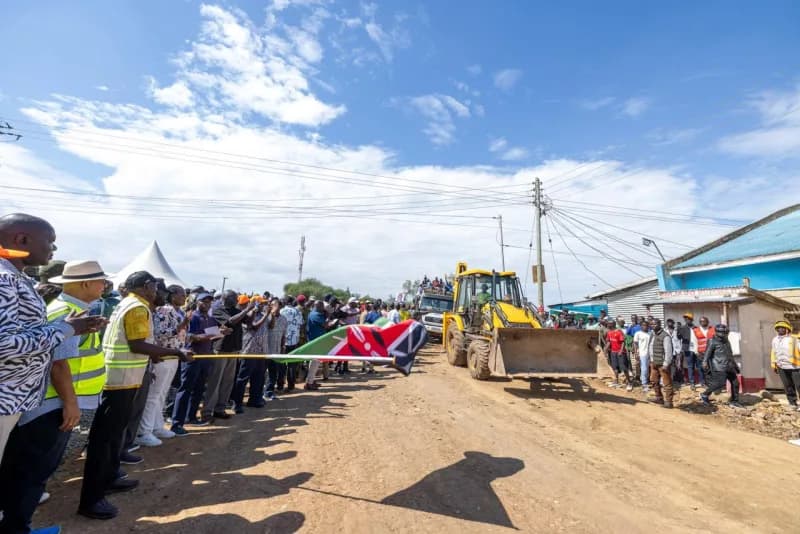

Construction of the Rironi-Mau Summit Highway is advancing as the government races to complete the major road upgrade in 2027, promising motorists a faster and safer connection between Nairobi, the Rift Valley and western Kenya.
The State Department for Roads said works along the corridor remain on schedule, maintaining the government's broader target of delivering the project by June 2027. The highway forms part of the Northern Corridor, a strategic transport network carrying passengers and cargo from Nairobi towards Nakuru, Eldoret, western Kenya and neighbouring countries.
The project covers approximately 233 kilometres and involves substantial expansion of the existing highway. The Rironi-Naivasha section is being widened from two to four lanes, while sections further towards Nakuru and Mau Summit will receive additional capacity, including a six-lane stretch between Naivasha and Nakuru.
Construction began in November 2025 after years of discussions over how to finance and expand the congested route. China Road and Bridge Corporation is handling works on one section of the corridor, while Shandong Hi-Speed Road and Bridge International Engineering is involved in another section.
Progress has accelerated considerably on some parts of the project. By late August, the contractor working on the Rironi-Naivasha section reported that construction had reached about 80 per cent, while overall works on the wider Rironi-Mau Summit corridor stood at around 20 per cent.
Roads and Transport Cabinet Secretary Davis Chirchir subsequently announced an October 30, 2026 target for completing and opening the dualled Rironi-Naivasha section. Earlier contractor estimates had targeted December for completing tarmacking on the same section, indicating that the government is pushing for an accelerated delivery timetable.
The phased opening means motorists could begin benefiting from completed sections before construction across the entire corridor is finished. Once Rironi-Naivasha is opened, attention will increasingly shift towards the remaining sections leading through Gilgil, Nakuru and ultimately Mau Summit.
The project is designed to address a problem familiar to thousands of motorists who regularly travel along the Nairobi-Nakuru highway. Heavy commercial vehicles, growing passenger traffic and limited road capacity have frequently resulted in lengthy traffic jams, particularly during weekends, public holidays and periods of unusually high travel.
Congestion along the route has implications beyond inconvenience for individual motorists. The Northern Corridor carries cargo moving between the Port of Mombasa, Nairobi, western Kenya and neighbouring landlocked countries, making delays along the highway potentially costly for businesses and regional trade.
Expanding the road is expected to increase capacity while reducing travel times and improving safety. The wider project includes interchanges, bridges, drainage infrastructure, tolling facilities and intelligent traffic management systems intended to create a more modern transport corridor.
The upgraded highway will also incorporate technology and renewable energy infrastructure. Contractors have outlined plans to install solar systems capable of generating about three megawatts to support road operations, while fibre-optic infrastructure is expected to run along the corridor as part of efforts to expand digital connectivity.
Parts of the project will eventually operate under a tolling arrangement. The Gilgil-Nakuru-Mau Summit section, for example, is being implemented through a long-term public-private partnership structure under which the private partner will finance, operate and maintain the road before ultimately transferring it back to the government.
Proposed toll charges have already attracted public debate. Figures reported for the project include approximately Sh8 per kilometre on the Rironi-Naivasha section and Sh8.50 per kilometre between Naivasha and Mau Summit, although the final arrangements motorists encounter will depend on the implementation of the tolling framework.
The scale of the investment has also been reported differently depending on the project components being referenced. Recent estimates have placed the broader development at between roughly Sh170 billion and Sh200 billion, reflecting the different sections and financing structures involved in the corridor.
There are also indications that some sections could be delivered slightly earlier than the broad June 2027 deadline. A recent Ministry of Foreign Affairs update said the Rironi-Gilgil section is expected to be completed by February 2027, with remaining works targeted for May 2027. The State Department for Roads, however, continues to communicate June 2027 as the overall delivery commitment.
Completing the highway would represent a significant change for motorists travelling between Nairobi and the Rift Valley. The existing route has struggled to accommodate growing traffic volumes, with bottlenecks around areas such as Rironi, Naivasha and Nakuru contributing to recurring delays.
For businesses, the impact could be equally significant. Faster movement of trucks along the Northern Corridor could reduce logistics delays and improve connections between Nairobi, agricultural and industrial centres in the Rift Valley, western Kenya and regional markets.
With construction now taking place simultaneously across different sections, the immediate milestone will be the opening of the upgraded Rironi-Naivasha stretch. The bigger test will come in 2027, when the government expects the wider corridor to finally emerge as a substantially expanded highway capable of carrying Kenya's growing passenger and freight traffic.