Microsoft and Nvidia are taking another major step towards making artificial intelligence run directly on personal computers, unveiling a new generation of Windows laptop designed to handle demanding AI workloads without constantly relying on cloud computing.
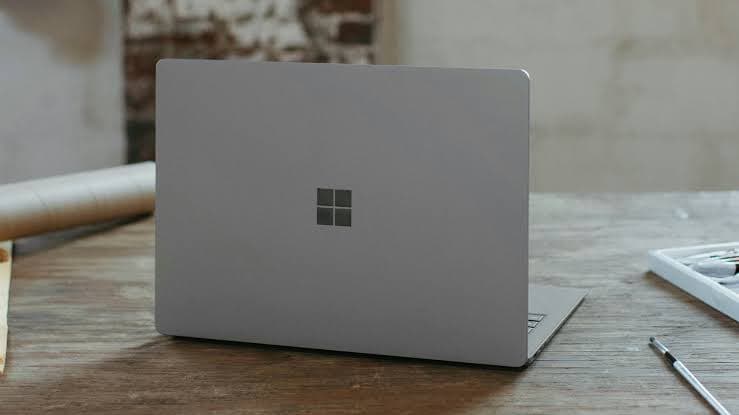
The Surface Laptop Ultra brings together Microsoft's Windows and Surface businesses with Nvidia's growing ambitions in personal computing. Microsoft chief executive Satya Nadella and Nvidia CEO Jensen Huang presented the machine at a company event in San Francisco on Wednesday, highlighting a future in which increasingly capable AI agents operate directly on laptops and desktops.
At the centre of the machine is Nvidia's RTX Spark technology, which has been designed to provide the computing power required for sophisticated artificial intelligence workloads. Instead of sending every difficult request to remote servers, compatible applications can perform more of the processing on the computer itself.
That could have significant implications for how AI software is used. Most powerful generative AI systems currently depend heavily on enormous data centres containing specialised processors. When a user asks an AI model to perform a complex task, information is commonly transmitted to cloud infrastructure where the computation takes place before the result is returned to the device.
Microsoft and Nvidia are betting that sufficiently powerful personal computers can shift some of that workload back to users' own hardware. Tasks such as software development, data processing and agent-driven business work could increasingly happen locally, potentially improving response times and reducing dependence on an internet connection for certain workloads.
The development is particularly significant as AI agents become more capable. Unlike conventional chatbots that primarily respond to individual questions, agents can work through longer tasks, interact with files, write software and carry out sequences of actions with greater independence.
Running those systems directly on personal computers could give them faster access to local applications and information, but it also introduces security challenges. An AI agent capable of reading files, operating software and executing actions on a computer potentially has access to highly sensitive information, making permissions, isolation and security controls increasingly important.
The collaboration also reflects an important economic problem facing the AI industry. Artificial intelligence services require enormous amounts of computing capacity, forcing technology companies to spend heavily on data centres, electricity and advanced processors.
For Microsoft, moving suitable workloads from its Azure data centres onto computers purchased by customers could reduce some of the infrastructure required to serve increasingly demanding AI applications. The company would still operate enormous cloud infrastructure, but local computing could become another layer in how AI workloads are distributed.
Nvidia has a different strategic opportunity. The company has become the dominant supplier of processors used to train and operate advanced AI systems in data centres, but the conventional PC processor market has remained heavily influenced by Intel and AMD.
Bringing Nvidia technology deeper into Windows laptops potentially gives the chipmaker access to one of the largest remaining computing markets where its rivals retain significant positions. Microsoft, meanwhile, gains another hardware platform capable of supporting its broader strategy of embedding AI throughout Windows.
The companies face a significant obstacle: cost. Advanced AI hardware requires large amounts of memory and expensive processors, and rising memory prices are making powerful computers increasingly costly.
Reuters reported that laptops envisioned for local AI workloads were generally priced below $2,000 when Microsoft began promoting the concept roughly two years ago. At the October 7 exchange rate of about Sh129.83 to the dollar, that is approximately Sh260,000 before local taxes, shipping and retail margins.
The cost of even more powerful AI hardware has risen sharply. Nvidia recently increased the price of its DGX Spark AI desktop by about 75 per cent to $6,950, equivalent to approximately Sh902,000 at the same exchange rate, following increases in the cost of the 128GB of memory used by the machine.
Those prices expose a potential contradiction in the move towards local artificial intelligence. Software capable of performing sophisticated work directly on personal computers is becoming available just as the hardware required to run the most demanding workloads is becoming expensive enough to remain outside the reach of many consumers.
Analysts therefore expect early adoption to be concentrated among businesses, developers, researchers and professionals who can justify paying for high-performance local AI. Consumer adoption could expand later as hardware becomes cheaper and more efficient, a pattern already seen repeatedly in personal computing.
Microsoft is not alone in pursuing the idea. Apple has also been designing its latest computers around increasingly powerful on-device artificial intelligence, creating another area of competition between Windows and Mac computers.
The larger technological shift could ultimately change what buyers consider important when purchasing a laptop. For decades, consumers compared computers using measures such as processor speed, storage, battery life and graphics performance. AI performance and the ability to run models locally could increasingly become another major specification.
That could also change the economics of AI itself. Instead of paying entirely for computing power through subscriptions and cloud services, users could effectively purchase some of that computing capacity upfront as part of the computer sitting on their desks.
Cloud computing will remain essential for training the largest models and handling workloads that exceed the capabilities of individual devices. The emerging model is therefore more likely to combine local and cloud AI rather than replace one with the other completely.
The Surface Laptop Ultra represents an important test of whether that hybrid future is ready for mainstream professional computing. Microsoft has the operating system, Nvidia has the AI hardware, and developers are rapidly producing agents capable of performing increasingly complex tasks.
The remaining question is whether customers will be willing to pay for enough computing power to bring those agents home.